
Epitaph of a young woman in a Scottish Highland graveyard

Jan 08, 2026
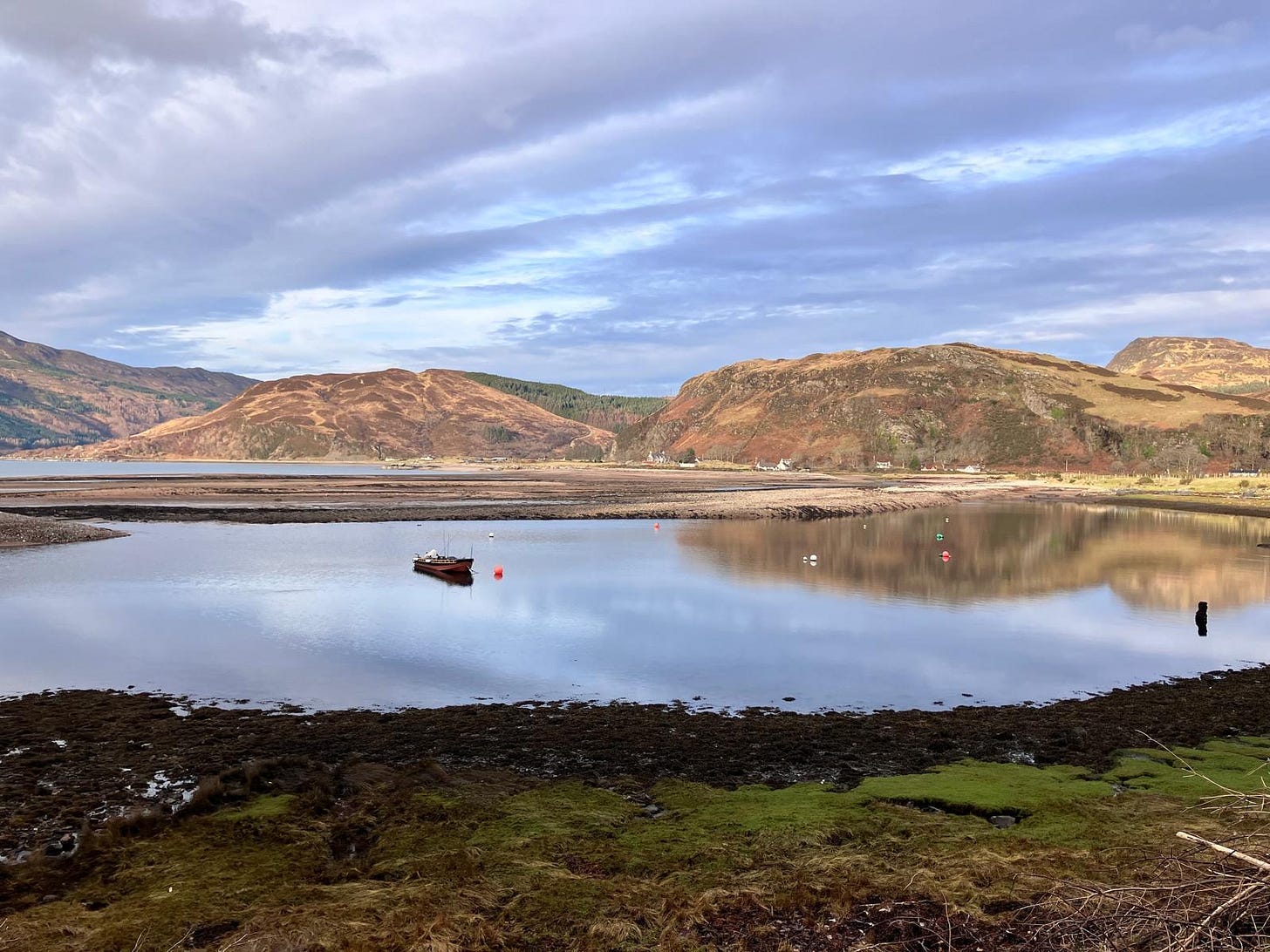
I had the wonderful opportunity to visit Glenelg recently – a small, scenic village in the Lochalsh district of Scotland. It sits on the mainland coast along the Sound of Sleat, directly opposite the Isle of Skye. To reach it, you take a beautiful and dramatic single-track road over the Mam Ratagan Pass. The perfect example of ‘it’s about the journey, not just the destination,’ and in this case, both were wonderful.
Skye lingers across to you with the comforting presence of a friendly neighbour. Although that was not the case during Jacobean times, when the threat to the mainland came from Skye – but that’s for another substack.
The atmosphere and surroundings have something I doubt anyone could put into words properly. You have to be there in person to know what I mean.
Glenelg Church of Scotland Churchyard
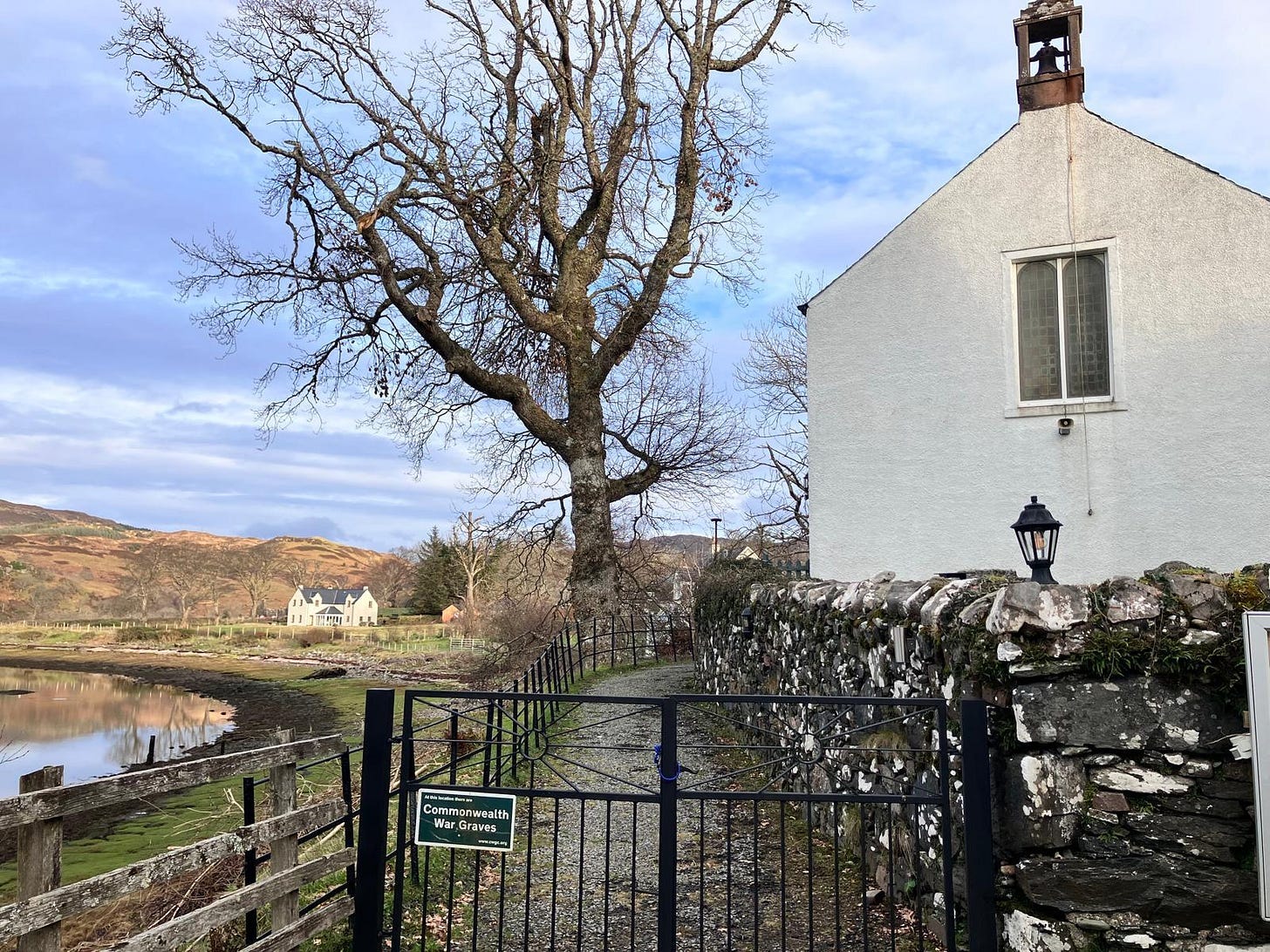
I visited the local churchyard and found many interesting graves, some Commonwealth war graves for those in the services who found their permanent rest back in Glenelg. That too is for another substack, as I want to go into more detail about the soldiers and sailors who had a grave. Also, those who were on family stones and who are buried or commemorated on Commonwealth War Graves memorials abroad. What I say is that the men of Glenelg served in every corner of the Great War, not just the more well-known battlefields of the Western Front of Northern France and Belgium. I will write about the outstanding Category A Memorial, which has the most picturesque location, on Substack. I have seen many memorials over the years – this one is simply beautiful, the actual sculpture is outstanding.
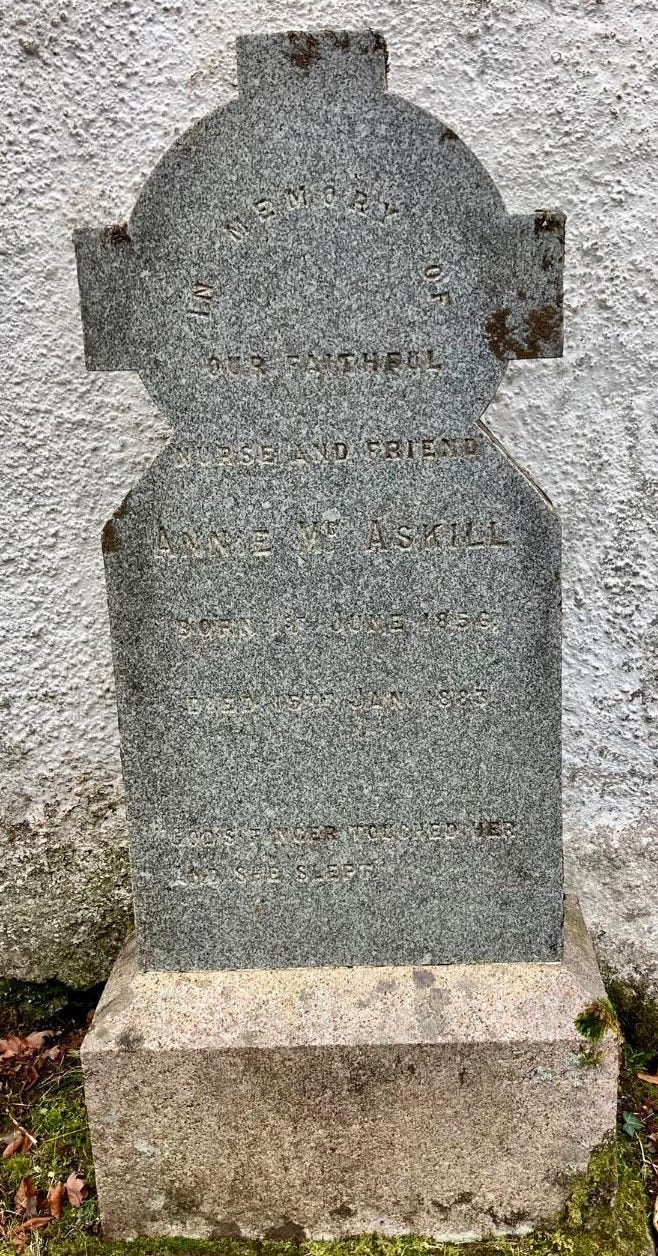
Annie McAskill
Located at the very end of the churchyard, tucked in a corner against the church wall, was a headstone – hard to read, but the epitaph actually struck me as sinister – at first thought.
The phrase “God’s anger touched her, and she slept” was carved on the gravestone of Annie Macaskill. The full inscription on Annie’s headstone read,
In Memory of Our Faithful Nurse and Friend,
Annie W McAskill
Born 1st June 1856
Died 15th January 1883
God’s Anger Touched Her
And She Fell Asleep
What had Annie done? – She was only 28.
I thought only negative things about Annie because of reading her epitaph. That before her death, she might have been ostracised from the tight-knit God-fearing community, who may have believed that her death was some kind of spiritual justice. That she may have fallen in love with someone else’s husband, or worse, that it may have been a woman. Worse still, why would they put that on her stone as an epitaph? I decided to find out more.
Calvinism and Victorian Epitaphs
Annie’s epitaph was simply how people remembered her in that era. Annie was more than likely struck down by disease because she was a nurse. A doctor, who had come to help the community, was also buried in the same churchyard and was also struck down by disease. But why would God have been angry with Annie?
Annie’s epitaph dates to the Victorian era, a time when death was everywhere in the Highlands, and people leaned hard on their faith to make sense of it. “Touched” comes straight from the language of the Bible – think Job saying, “the hand of the Lord hath touched me,” which basically means God’s judgment or affliction has landed. “God’s anger” fits with the Calvinist outlook that ran deep in the area. Back then, if someone – especially someone young – died suddenly, people often saw it as God’s will, maybe even as a sign of divine anger or mysterious purpose. “She slept” is classic Christian shorthand for death. It softens the blow, hinting at peaceful rest and the hope of resurrection, plucked right from scripture like 1 Thessalonians: “those who sleep in Jesus.”
Reading the inscription, you get the sense that Annie’s death in 1883 – still young – hit her family and friends hard. They may have seen it as something God had done, maybe suddenly, maybe without warning, but also as a passage to eternal rest. There’s a kind of heartbreak in the line, but also acceptance, a flavor that runs through a lot of Highland gravestones from that time. It doesn’t point fingers or talk about her sins; it just lets the mystery be.
Queen Victoria and Prince Albert
Now, about Victorian epitaphs: Britain in the 1800s was obsessed with death and mourning. Disease took lives all the time, especially young ones, and Queen Victoria’s own long mourning after Prince Albert died set the tone for a whole generation.
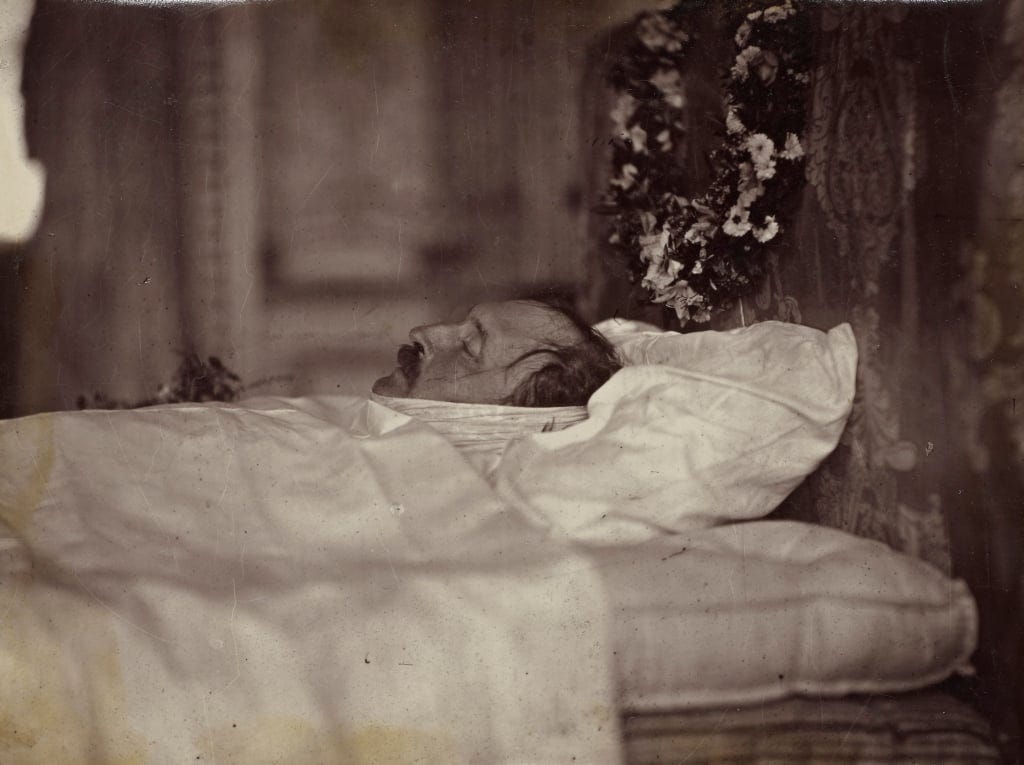
People liked sentimental, comforting gravestone inscriptions. The language shifted from older, grim warnings about death to softer, more hopeful lines – “Asleep in Jesus,” “Gone but not forgotten,” and, like here, “She slept.” These words tried to paint death as a gentle sleep instead of harsh judgment.
Religion shaped everything – in life and in death
Religion shaped everything. In Scotland, especially the Highlands, grave inscriptions often leaned into Calvinist beliefs – God’s will, God’s hand, even God’s anger. If a death came suddenly or felt unfair, families might see it as part of a bigger, unknowable plan. Some stones quoted scripture or borrowed poetic lines, sometimes from books of epitaphs or even from stonemasons’ catalogues. Families added personal touches, too – mentioning jobs, virtues, or just a line about being a faithful friend. In rural places, where reading wasn’t always common, gravestones sometimes used symbols instead of words – urns, weeping willows, things like that.

So, in this quiet Highland churchyard, Annie’s stone stands as both a personal memorial and a snapshot of Victorian Scotland’s way of facing loss- with poetry, faith, and a little bit of mystery.
What it says to me now is that Annie had friends,
had purposeful work as a nurse, and that she was loved.
Sometimes that is all the epitaph we need.